Digital nomad co-living has gone from niche experiment to mainstream choice. There’s a moment in every nomad’s journey where the freedom starts to feel a bit lonely. You’re in a nice apartment in a nice city, your work is going well, but you haven’t had a proper conversation with anyone in three days. Your social life has been reduced to smiling at baristas.
Co-living spaces exist to solve exactly this. In 2026, they’ve come a long way from the rough shared houses of a few years ago. The good ones now combine proper living with proper working.
What digital nomad co-living looks like now
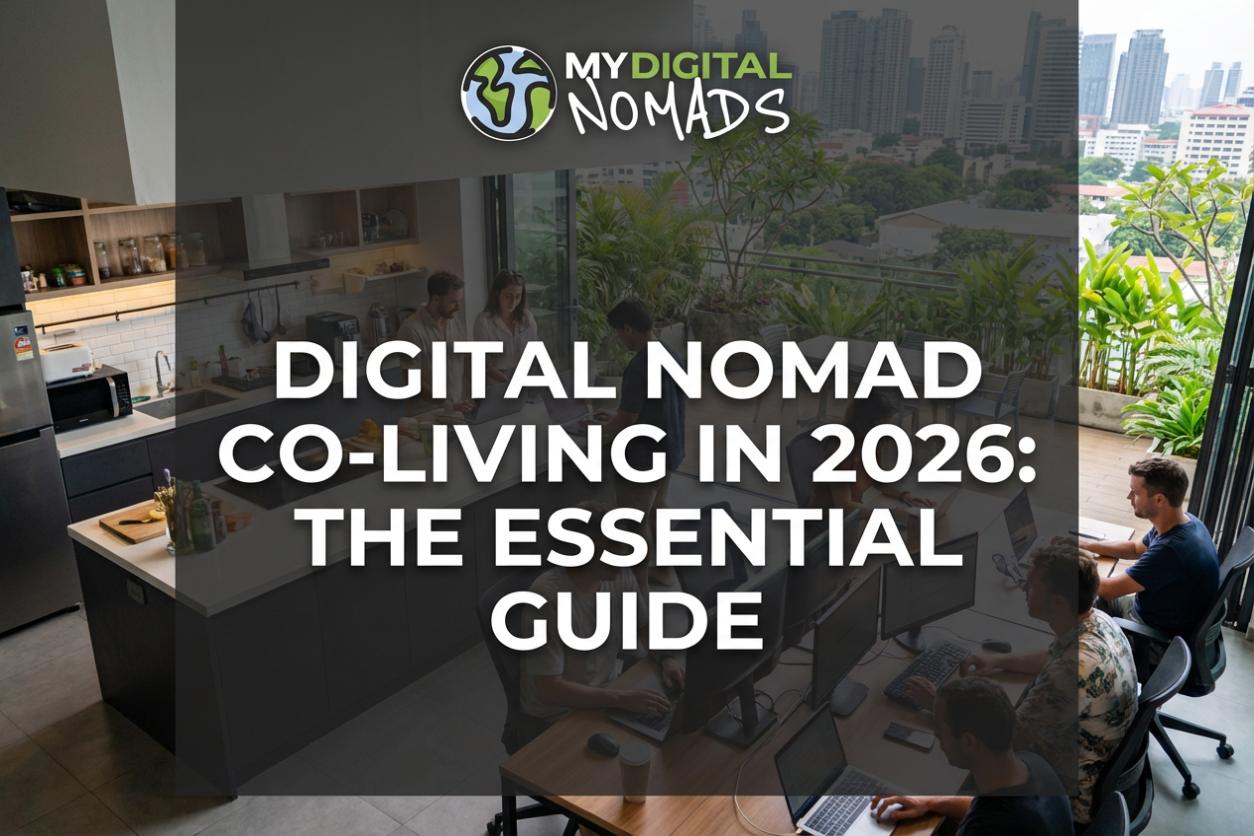
Forget hostel vibes. Modern digital nomad co-living typically means private bedrooms (often en-suite) with shared common areas, kitchens, and built-in co-working spaces. The WiFi is fast. The chairs don’t wreck your back. Coffee is included.
What separates a good co-living space from a fancy Airbnb is community management. The best ones curate their residents, run events, make introductions, and create environments where connections happen naturally rather than being forced.
Prices range from €600/month for basic options in Southeast Asia up to €2,000+ in Europe. Most include workspace, utilities, and community activities. For a breakdown of how this compares to other nomad expenses, see our digital nomad cost guide.
Why nomads are choosing digital nomad co-living over solo apartments
The early digital nomads wore independence like a badge. Solo travellers who figured everything out alone. The 2026 nomad tends to be more practical about it. Humans are social, isolation has a cost, and pretending otherwise gets old.
Co-living addresses this head-on. You arrive somewhere new and you immediately have people around. People who get your lifestyle, who face the same weird challenges, and who might become collaborators or genuine friends. It happens over shared dinners and morning coffee, not at forced networking events with name badges.
If you’ve noticed the loneliness and burnout creeping in, co-living is worth considering before things get worse.
Digital nomad co-living spaces getting it right
Palma Coliving in Valencia offers private rooms, dedicated co-working with fibre internet, and weekly community events, from €864/month. They’ve figured out the balance between privacy and togetherness.
Savi Coliving near Valencia takes a different approach. Mountain villa, 25 minutes from the city, Starlink WiFi, communal meals, wellness activities. Suits nomads who want nature and focus over urban energy.
Coworksurf in Tenerife blends co-living with surf culture. Ocean-facing, fast internet, dedicated workspaces. Good for nomads who want an active routine alongside their work. It also makes a great summer workation base.
Sun and Co in Jávea is one of the originals. A converted villa on the Spanish coast that’s been doing digital nomad co-living for years and has the formula down.
Is digital nomad co-living for everyone?
No. If you need silence to work, or you’re particular about your living space, a private apartment will suit you better. Co-living asks for flexibility and a certain social energy that not everyone wants to give, and that’s completely fine.
But if you’ve felt the weight of nomad loneliness, or if you’ve ever wished you could show up somewhere and immediately have people to eat dinner with, it’s worth trying. You might find it’s the thing that was missing.