

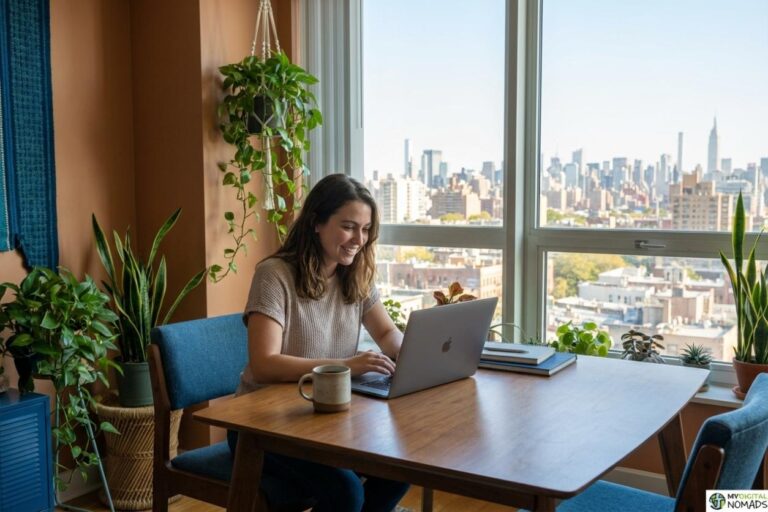
The slowmad lifestyle is what happens when digital nomads get tired of packing.
I don’t mean that as a joke. The stereotypical nomad changes cities every few weeks, works from a different cafe every day, and posts sunset laptop photos to Instagram. That version of nomadism looks exciting from the outside. From the inside, after a year or two, it’s exhausting.
In 2025, something shifted. More nomads started staying put. Three months minimum. Six months, ideally. Some are spending a full year in one city before moving on. The community started calling this the slowmad lifestyle, and it’s become the dominant pattern for experienced remote workers.
Why the constant moving stopped working
The practical answer is obvious: you can’t do your best work when you’re dealing with a new apartment, new WiFi, new grocery shops, and new time zone every three weeks. There’s a settling-in tax that nobody talks about. It takes a week to get comfortable, another week to find your rhythm, and by the time you’re productive, you’re packing again.
But there’s a deeper reason. The always-moving approach is lonely. We’ve written about overcoming loneliness as a remote worker before, and the feedback from our community was overwhelming. Real friendships need time. You can’t build a social circle in 14 days.
The slowmad lifestyle fixes this by trading breadth for depth. Fewer stamps in the passport, but actual relationships in the places you live.
What a slowmad routine actually looks like
People following the slowmad lifestyle tend to rent apartments for 3-6 months. They get a monthly co-working membership instead of paying by the day. They find a regular coffee place, a gym, a local restaurant where the staff know their name. It sounds mundane. That’s the point.
Nomad List data from 2025 shows the average stay length for digital nomads has increased from 28 days to 67 days. That’s a fundamental shift in how this community operates.
The workday itself gets more stable too. When you’re not constantly adjusting to new environments, you can establish proper time management habits that actually stick. Morning routine, focused work blocks, evening walks in a neighbourhood you’ve come to know. The novelty wears off, which is exactly what productivity needs.
The money makes more sense too
Moving is expensive. Flights or trains every few weeks. Deposits on new apartments. The markup on short-term rentals versus long-term leases. Throwing away half your groceries because you’re leaving on Thursday.
When you commit to a place for three months or more, your monthly costs drop significantly. In cities like Lisbon, Medellín, or Chiang Mai, a 3-month apartment lease can run 40-50% cheaper per month than a rolling 1-month rental. Co-working spaces offer quarterly discounts. Even your travel insurance gets simpler when you’re not crossing borders constantly.
For freelancers especially, the slowmad lifestyle means more predictable expenses and fewer financial surprises. That stability shows up in your work and your stress levels.
What slowmads sacrifice
Let’s be honest about the trade-offs. You see fewer places. Your Instagram gets less interesting. There’s a particular kind of restlessness that kicks in around month three when the city starts feeling too familiar and you start browsing flights.
The FOMO is real. While you’re settling into your routine in Porto, someone in your group chat is posting photos from a beach in Sri Lanka. The temptation to abandon your lease and join them is strong.
The people who stick with the slowmad lifestyle have usually made peace with this. They’ve realised that the point isn’t to see everything. It’s to live well somewhere. That distinction takes most nomads a couple of years of frantic moving to figure out.
Is the slowmad lifestyle right for you?
If you’re new to remote work and nomadism, honestly, move around first. Get it out of your system. Visit the places on your list. Experience the chaos.
But if you’ve been doing this for a year or more and you’re tired, or your work is suffering, or you feel like you don’t have any real friends in any city, the slowmad approach might be the answer. It’s not giving up on the lifestyle. It’s growing into a version of it that actually works long-term.
We’re seeing this across our own team at mydigitalnomads. The people who produce their best work are usually the ones who’ve been somewhere for a while. They know how to switch off because they have a life outside of work in the place they’re living. That matters more than having a good view from the coworking space.
The slowmad lifestyle isn’t a trend. It’s what sustainable nomadism looks like.